What actually differs
What changes between a Whirlpool and a Sub-Zero call
The $80 service call is identical for every brand on this page. What differs is how the visit runs, and it is worth knowing before you book.
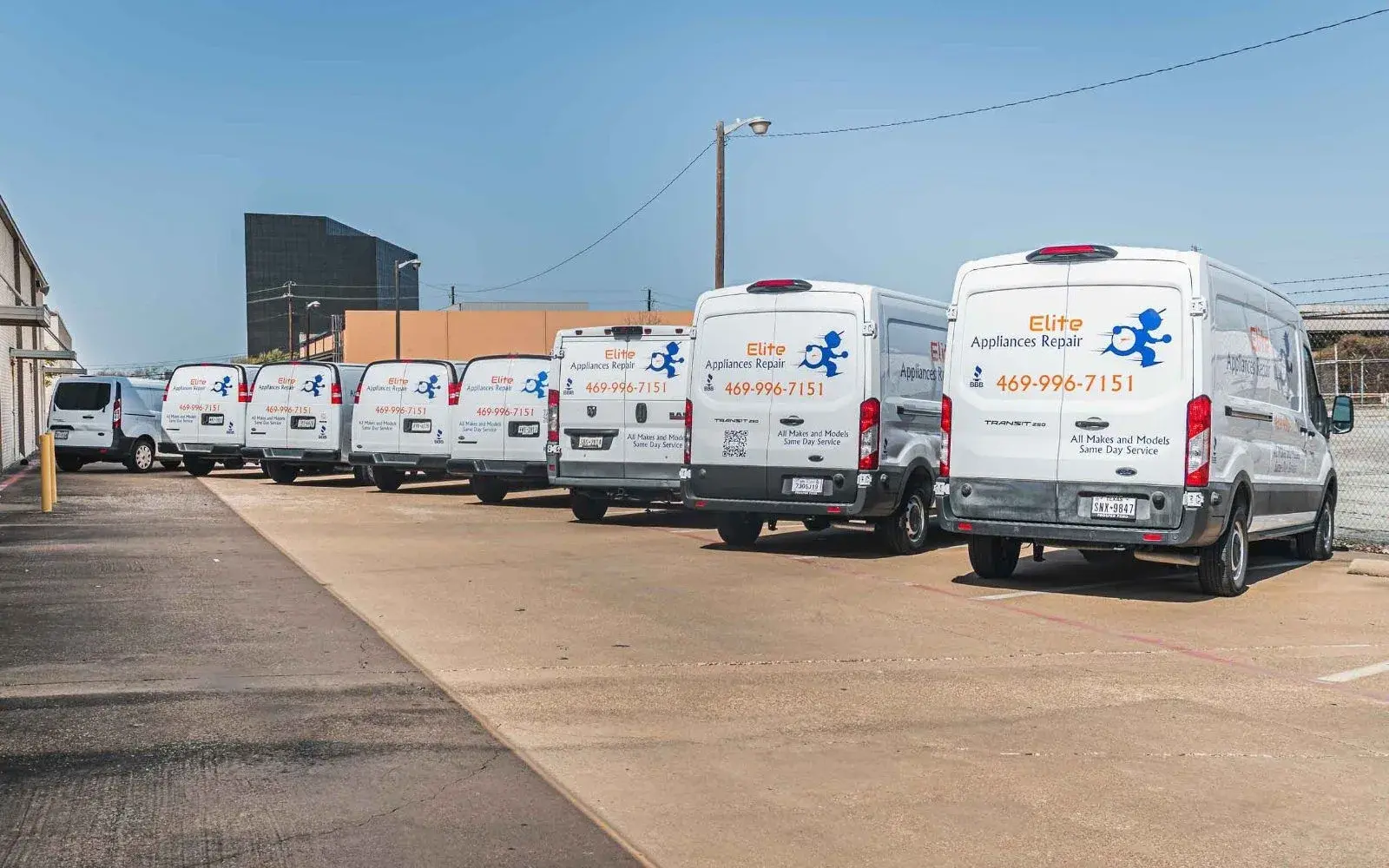
Whether the part is on the van
For the mass-market platforms we carry the components that fail most often — inlet valves, drain pumps, thermal fuses, igniters, evaporator fans, compressor relays, ice maker modules. That is why most of those repairs finish on the first visit. For built-in and pro-style equipment the part is almost always ordered, because stocking specialty boards for thirty-five low-volume brands would mean carrying inventory that never turns. Your technician gives you the lead time at the visit.
Sealed-system work
Any repair that opens a refrigerant circuit is EPA-regulated work, and our technicians are EPA certified for it. It also carries more diagnostic risk than a mechanical fault, so on high-value refrigeration we would rather spend an extra half hour confirming the diagnosis than open a system on a guess. On a Sub-Zero or Liebherr column that caution is the difference between a repair and a write-off.
Getting the appliance out
Freestanding units come forward and the back is readable in minutes. Built-in and panel-ready installations often have to come out of the cabinetry before anything can be tested, and the cabinetry is not always built to let them. Those visits are longer, sometimes need two technicians, and we plan for it when you tell us the appliance is integrated rather than discovering it on the doorstep.
Whether it is still the manufacturer's problem
If your kitchen was fitted in the last few years, some of it may still be covered. Sealed-system components on refrigeration frequently carry five to ten year manufacturer terms, and those often survive a change of owner. We check the serial before quoting, and if the fault belongs to the manufacturer or the builder we tell you and step back. We lose the invoice and keep the customer, which is the better trade.